Why 1980s and 1990s honey oak kitchens are good candidates for paint
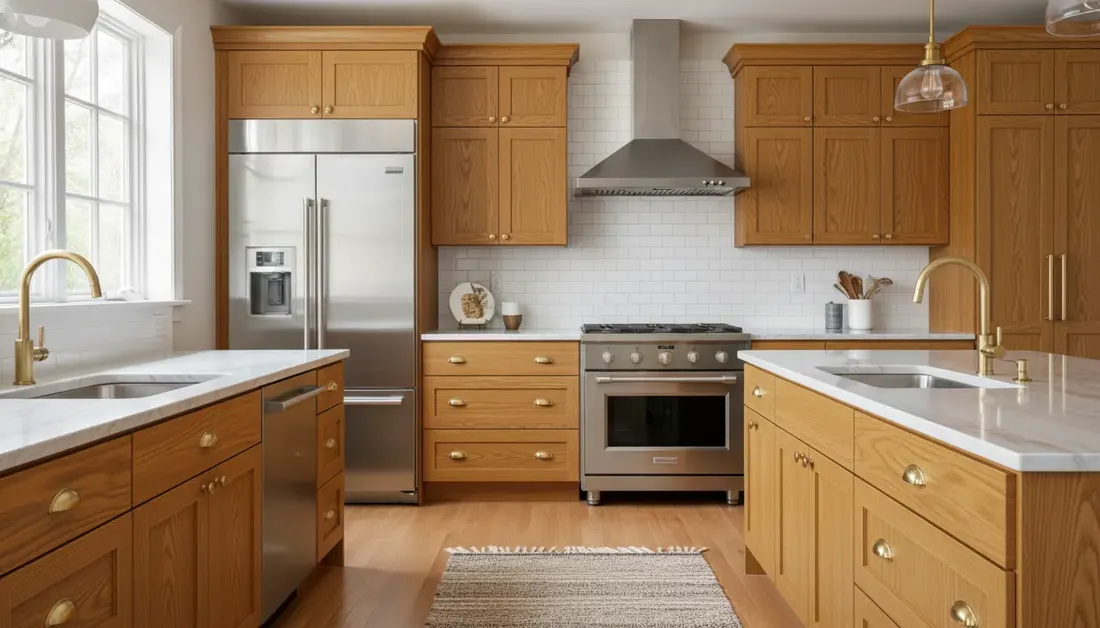
Honey oak kitchens are good candidates because the problem is the colour, not the cabinets. Solid wood boxes from the 1980s and 1990s are usually structurally sound. What dates the room is the golden orange finish and, in many kitchens, the arched cathedral door panels.
That split matters for your budget. When the boxes are solid, you pay to change the surface instead of paying to rip out and rebuild. Painting an oak kitchen in the Edmonton area costs $3,000 to $6,000, compared with $20,000 to $35,000 for a full replacement of the same cabinets.
Before you commit, check three spots: the sink base for water damage, the doors beside the stove and dishwasher, and any hinge holes that have stripped out. Sound wood in those areas means paint is worth doing.
Oak grain: paint over it or fill it first
Oak grain is the single biggest factor in how a painted oak kitchen looks. Oak is an open-grain wood, which means the surface has deep pores that run along the board. Paint does not hide those pores. It coats them.
Painting over the grain
Paint applied over unfilled oak leaves visible grain texture. From across the room the cabinets read as a solid colour. Up close, and in raking light from a window, you see the lines of the grain under the paint. Some homeowners like that it still reads as wood. Others expect a smooth, furniture-style door and feel let down.
Grain filling first
Grain filling closes the pores before primer and colour go on, so the grain does not telegraph through the finish. The result is a flat, smooth door face that looks closer to a new painted cabinet. Grain filling is part of the oak cabinet refinishing process, along with stripping, priming, spray finishing, and a clear coat.
Decide this first: if you want to see wood texture under the colour, painting is the lower-cost route. If you want a smooth surface, plan for refinishing with grain filling.
Painting vs refinishing oak cabinets in Sherwood Park and Edmonton
Painting oak cabinets costs roughly half of refinishing them in Sherwood Park. The gap pays for the extra steps that change how the grain looks and how the finish is sealed.
| Route for oak cabinets | What happens to the grain | Sherwood Park | Edmonton |
|---|---|---|---|
| Cabinet paintingMost kitchens take 3 to 4 days | New colour over the oak. Grain texture stays visible. | $2,800 to $6,000 | $3,000 to $8,000 |
| Cabinet refinishingAbout 5 to 7 days | Stripped and grain filled, then primed, sprayed, and clear coated. Smooth face. | $5,500 to $14,000 | $4,000 to $10,000 |
| Cabinet refacingTimeline set at the quote | Oak doors and drawer fronts replaced with new fronts on the existing boxes. | $13,000 to $26,000 | Confirmed at the quote |
| New cabinetsAbout 4 to 8 weeks | Oak boxes and doors removed and rebuilt. | $20,000 to $40,000+ across the region | |
A dark stain taken to white or grey sits at the upper end. In Edmonton, a stain-to-paint conversion done as refinishing starts at $5,000. The Edmonton cabinet painting cost guide breaks prices down by door count.
Popular colour directions for painted oak kitchens
Cabinet colour is a personal call, and the right one depends on your floors, counters, and light. These are starting points, not trends.
- Soft white. Benjamin Moore Cloud White (OC-130) is one of the colours the contractor cites for honey oak conversions. A white brightens a kitchen that the orange oak made feel smaller.
- Deep navy. Benjamin Moore Hale Navy (HC-154) is the other colour cited for oak kitchens. It suits an island or lower cabinets under lighter uppers.
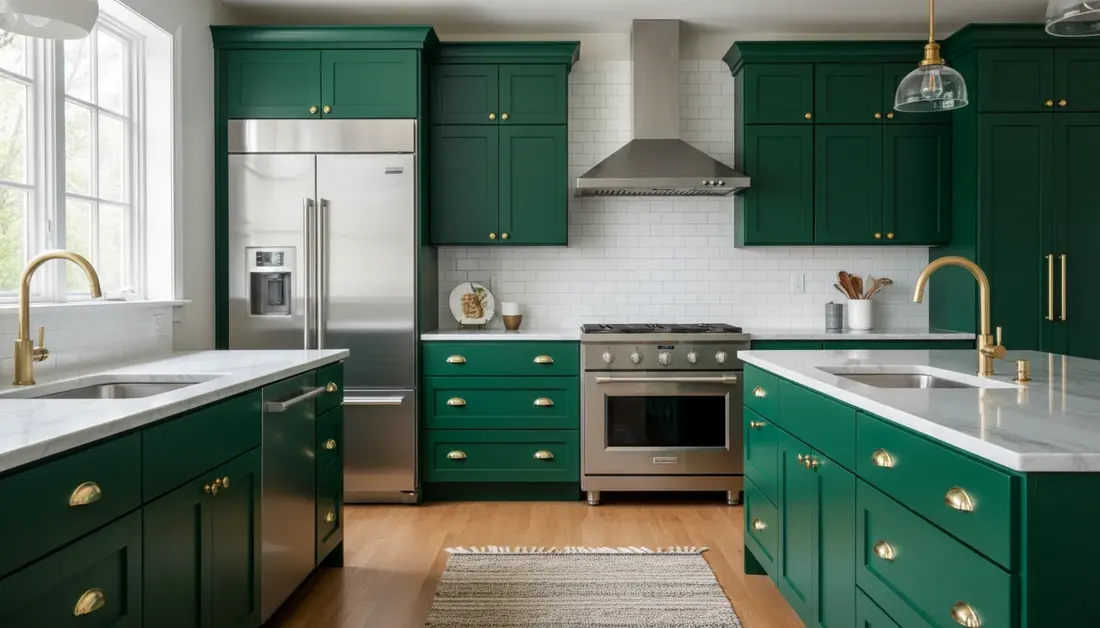
- Emerald, sage, or black. These appear in the concept renders on this site as ideas to picture. Emerald and black give a strong contrast. Sage sits between a colour and a neutral.
A free colour consultation comes with every estimate, so you can test a choice against your own counters before it goes on. The kitchen cabinet paint colours guide covers more options.
How to make brown cabinets look modern
Brown cabinets look dated for three reasons: the warm orange tone, the brass or wood knobs, and the door shape. Deal with those three and the kitchen reads as current.
- Change the colour. A solid paint colour removes the orange cast, which does most of the work.
- Change the hardware. Longer bar pulls or matte black or brushed nickel handles replace the small round knobs common on oak doors. If the new pulls use different hole spacing, the old holes need filling before any paint goes on.
- Deal with the door style. Paint and refinishing keep the door shape, so arched cathedral panels still look arched in white. If the arch is what bothers you, cabinet refacing puts new door fronts in a simpler style on your existing boxes.
Many oak kitchens only need the first two. Kitchens with heavy arched doors often look better with refacing, and a photo of one door is enough to talk through the choice.
What the process looks like when a pro paints oak cabinets
- Estimate. A free in-home visit or photo-based estimate, then a detailed written estimate covering prep, product, and labour.
- Masking and removal. Doors and drawers come off. Counters, floors, and appliances are masked.
- Surface work. For refinishing, the oak is stripped and grain filled, then primed.
- Spraying. Doors are sprayed in the shop with HVLP spray equipment for a finish with no brush marks. Boxes are finished on site. Products include Benjamin Moore Advance and Sherwin-Williams ProClassic, and refinishing can use catalyzed lacquer or conversion varnish.
- Reinstall. Every door, drawer, and hinge is adjusted, followed by a final walkthrough with you.
Every job carries a 5-year written workmanship warranty that starts at completion. See how long painted cabinets last for what affects wear, and the best paint for kitchen cabinets guide for how the products compare.
Painting oak cabinets yourself
DIY oak painting is possible, and it asks for more patience than most rooms. Oak cabinets carry years of kitchen grease, so every door needs a thorough degrease before sanding. The surface then needs a primer suited to wood that bonds well, and several thin coats with full drying time between them.
Two oak-specific problems catch DIY painters. The first is grain: without a filler, the texture stays. The second is brush marks on flat door panels, which show more in a solid colour than they did in stain. Follow the drying and cure instructions on the product label, and handle doors gently for a while after they go back up.
If your kitchen is in daily use or has more doors than you have space to lay out, a shop-sprayed job is usually the better trade. Kitchen cabinet painting covers what a full job includes.